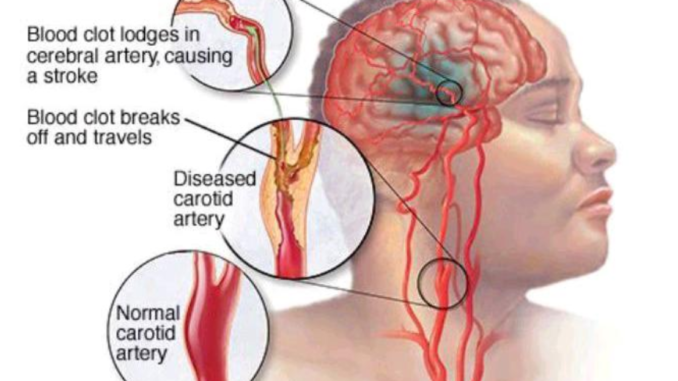

A stroke is a serious medical emergency that happens when blood flow to part of the brain is interrupted. When brain cells are deprived of oxygen and nutrients, they begin to die, and the body parts controlled by that area of the brain may stop functioning properly. Strokes can be life-threatening or lead to permanent disability if not treated quickly.
There are two main types of stroke. An ischemic stroke occurs when a blood clot blocks a vessel supplying the brain, while a hemorrhagic stroke happens when a blood vessel ruptures and causes bleeding in the brain. Although ischemic strokes are often treatable, treatment is most effective only within the first few hours after symptoms begin. That is why recognising early warning signs is critical.
In some cases, the body may show warning signals hours or even days before a full stroke occurs. These signs should never be ignored.
The FAST Test (Quick Self-Check)
Health professionals recommend the FAST test to identify a possible stroke:
F – Face: Ask the person to smile. Does one side of the face droop?
A – Arms: Ask them to raise both arms. Does one arm drift downward?
S – Speech: Ask them to repeat a simple sentence. Is speech slurred or strange?
T – Time: If you notice any of these signs, seek emergency medical help immediately and note the time symptoms started.
7 Common Stroke Warning Signals
Sudden numbness or weakness
Especially on one side of the face, arm, or leg. This may begin as tingling or heaviness.
Confusion
Trouble understanding what others are saying or sudden mental disorientation.
Difficulty speaking
Slurred speech or inability to express thoughts clearly.
Vision problems
Blurred or lost vision in one or both eyes, or difficulty focusing.
Trouble walking
Loss of balance, poor coordination, or sudden clumsiness.
Dizziness
Feeling light-headed or unsteady without an obvious cause.
Severe, sudden headache
An intense headache that appears without warning and feels unlike any previous headache.
Strokes affect hundreds of thousands of people every year and can happen to anyone, at any age. Acting fast can mean the difference between recovery, disability, or death. If you or someone near you experiences any of these symptoms, do not wait—contact emergency medical services immediately. Time lost is brain lost.

Comments are closed.